Quality & build
Same 13A certificate, very different extension leads.
Every lead on the shelf claims the same rating.
What separates a safe one from a cheap one is inside - and you can see it.
Quick answer.
The 13A certificate is the floor, not the ceiling. Two leads can carry the same stamp while one hides thin stamped copper, hand-soldered joints and loosely routed wires - and the other runs one-piece copper busbars with none of those weak points. The price difference buys thicker copper, fewer hot spots and a factory that still answers emails after the sale.
What the certificate does not tell you
A 13A rating says the lead can carry 2,990W. It says nothing about how many times it can carry it, how hot it runs on the way, or what happens after a season in a cupboard. Open two "identical" 13A leads side by side and the difference is immediate.
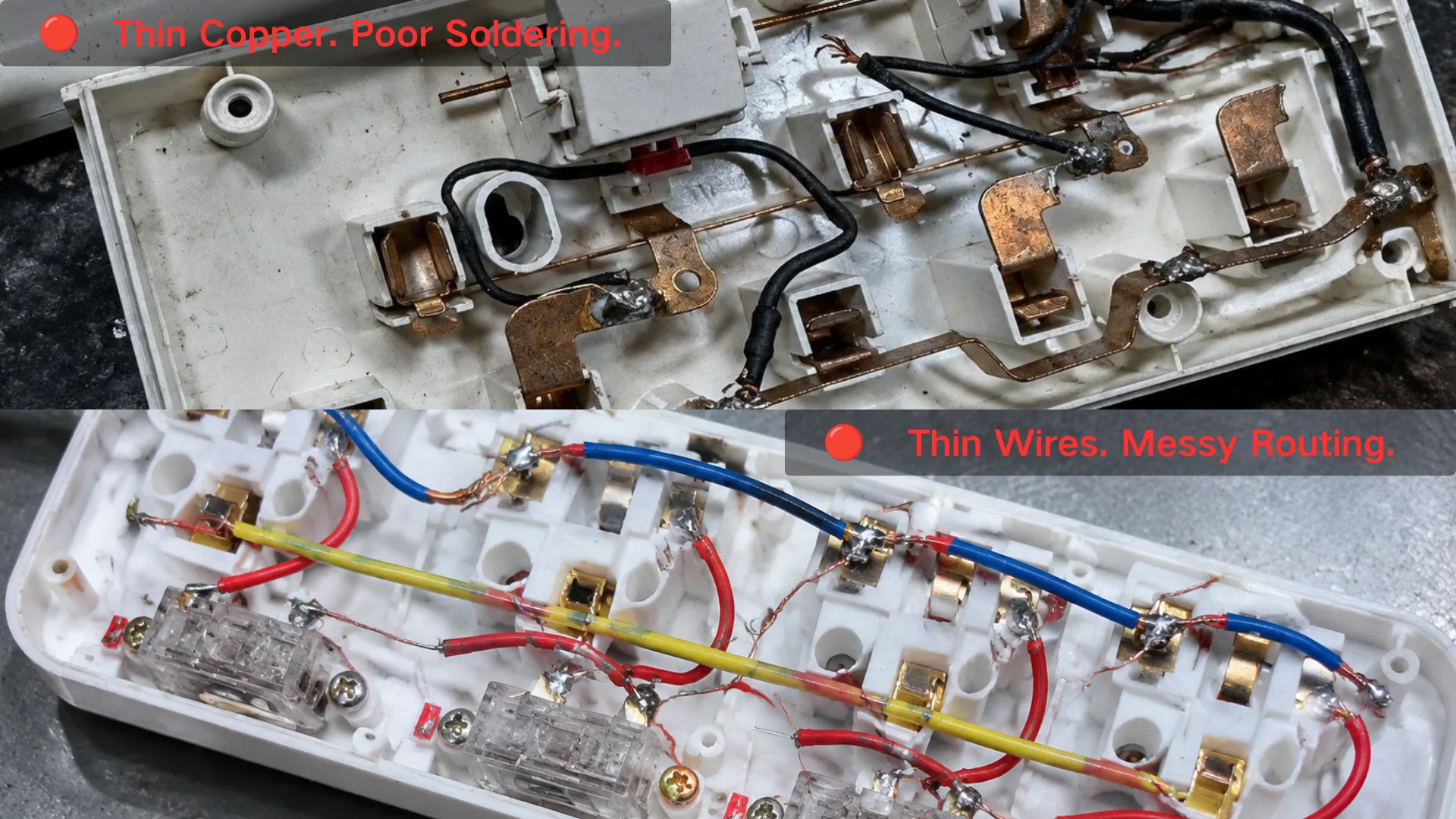
Thin copper, soldered joints, messy wiring
Three things jump out in a budget lead. Thin stamped copper strips heat up faster and sag under load. Hand-soldered joints sit in the middle of the current path - every joint is a small resistor and a potential hot spot, especially where a thin strip meets a thick cable. And thin, loosely routed wires make all of it harder to inspect - which is usually the point.
What one-piece copper changes
A PARTH lead is built around one-piece copper busbars that run the full length of the shell. No solder joints in the current path, full-thickness copper that stays cool under a Christmas-light load, and internal wiring routed and tested before the shell closes. It costs more to make - that is most of the price difference, and it is the part you keep.
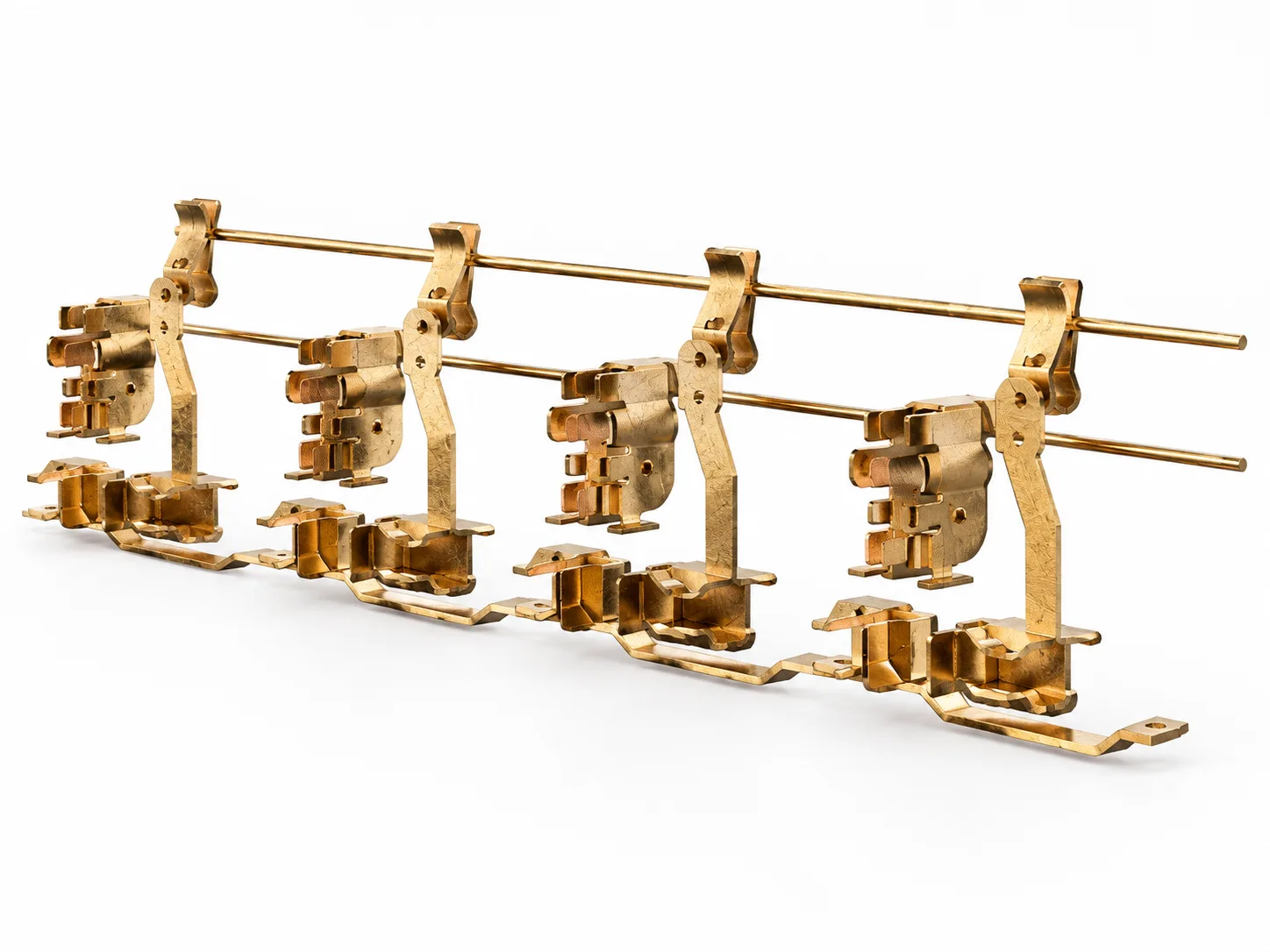
✓ One-piece copper busbars
✓ No solder joints in the current path
✓ Full-thickness copper that stays cool
✓ Neat, tested internal wiring
✓ UK support after you buy
✗ Thin stamped copper strips
✗ Hand-soldered joints - every one a hot spot
✗ Thin wires, loosely routed
✗ Quality that stops at the certificate
✗ Support that ends at the sale
What it means at Christmas
Party night is the worst-case test: maximum lights, maximum sockets, hours of continuous load. A well-built lead runs it cool and quiet. A thin-copper lead runs hotter every hour - and that is exactly when you do not want it failing. The full party setup is in our Christmas party guide.
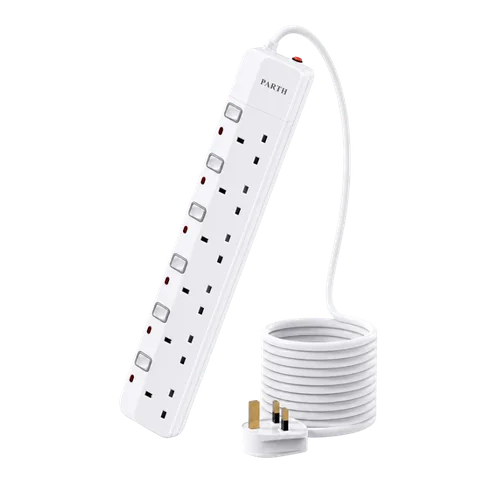
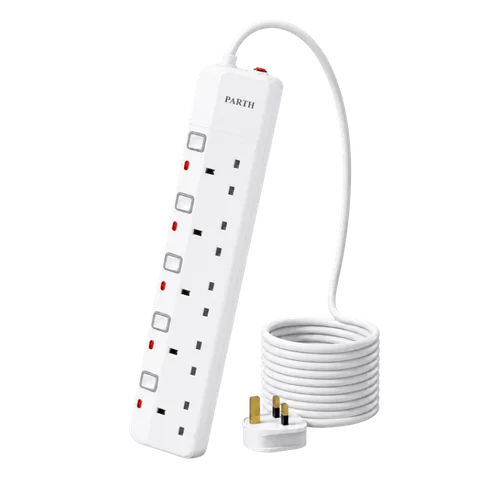
PARTH leads, built the expensive way

Common questions.
If both leads are certified, are they both safe?
A certificate means a sample passed a test on a given day. It does not describe the copper thickness in the unit you buy, how the joints were made, or how the factory controls the next batch. Build quality is what carries the load for years.
Why do some leads cost 10% less?
Typically thinner copper strip, soldered instead of one-piece conductors, and thinner wire. Those savings show up as heat, worn contacts and shorter life - not on the price tag.
How can I tell what is inside before buying?
Ask the seller to show the internals. We publish ours - the busbar photos in this guide are from a production PARTH lead, not a render.
Keep reading
See what a lead is for at Christmas in our Christmas party guide, what is inside every PARTH lead in what's inside an extension lead, and the load limits in how to avoid overloading. Compare the PARTH range.